

What is CBDV?
Posted by Tweedle Farms on Mar 24th 2026
What is CBDV?
CBDV (short for cannabidivarin) is one of the lesser-known cannabinoids found in hemp, but in recent years, it’s garnered some well-deserved recognition.
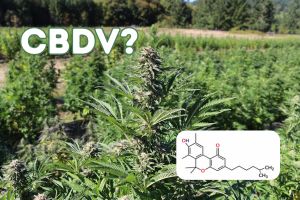
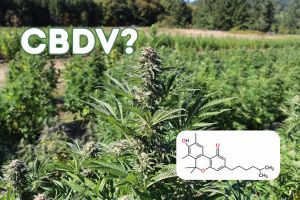
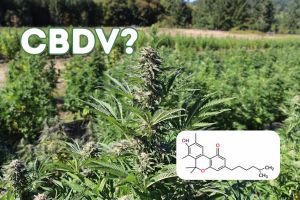
While it shares some similarities with CBD, CBDV belongs to a slightly different category of compounds known as “varins.” These cannabinoids are structurally distinct, featuring a shorter side chain that sets them apart at the molecular level. It’s a subtle difference, but one that has caught the attention of researchers and breeders alike.
In most hemp plants, CBDV appears only in trace amounts. As the plant matures, its cannabinoid profile tends to favor more dominant compounds like CBD. That means finding meaningful levels of CBDV requires intentional cultivation; specifically, cultivars bred to preserve and express this rare cannabinoid.
Why is CBDV so rare?
It comes down to plant chemistry.
Cannabinoids develop from precursor compounds during the plant’s growth cycle. In most cases, those precursors are converted into more dominant cannabinoids like CBD. CBDV follows a similar pathway, but it starts from a different precursor (CBGVA instead of CBGA), and far fewer plants are genetically predisposed to produce it in large amounts.
Because of that, CBDV-rich flower has historically been difficult to produce at scale. Only in recent years have breeders begun to stabilize cultivars that consistently express higher levels of CBDV.
What makes CBDV so interesting?
A big part of the interest in CBDV comes from how it engages with the body’s underlying systems.
Early research suggests CBDV may influence components of the endocannabinoid system, including CB1 and CB2 receptors. However, unlike THC, it doesn’t appear to bind strongly to these receptors. Instead, it may act more indirectly by modulating how signals move through the system rather than directly activating it.
CBDV has also been studied for its interaction with TRP (transient receptor potential) channels, which play a role in how the body processes temperature, inflammation, and sensory input. This is one of the primary areas driving scientific curiosity around CBDV.
Researchers have also explored how CBDV may influence neuronal signaling, particularly in relation to how nerve cells communicate and regulate excitability. While this research is still early, it points to CBDV engaging with systems beyond just the traditional endocannabinoid pathway.
It’s important to note that much of this work is still in exploratory or preclinical stages. Rather than focusing on outcomes, current interest is centered on how CBDV interacts with these biological systems.
What does CBDV feel like?
Like CBD, CBDV is non-intoxicating, meaning it won’t produce the “high” associated with THC.
Beyond that, experiences can vary depending on the product, terpene profile, and individual physiology. Rather than focusing on specific effects, many people approach CBDV by exploring how it fits into their broader relationship with hemp and cannabinoids.
Why explore CBDV?
For many, it comes down to discovery.
CBDV represents a different side of the plant—one that hasn’t been as widely explored as CBD or THC. It’s part of a growing movement toward understanding the full spectrum of cannabinoids and how they interact with both the plant and the people who use it.
As breeding techniques continue to evolve, cannabinoids like CBDV are becoming more accessible than ever. And for those who enjoy digging a little deeper, that opens the door to entirely new experiences.
Curious to dig in?
Tweedle Farms has a number CBDV offerings, from CBD flower to pre rolls, all of which are cultivated with intention. Whether you’re trying CBDV for the first time or adding it to your rotation, you’ll find products that highlight its unique place in the hemp spectrum.
Take a closer look and explore what makes CBDV so compelling.